
Ebola: The Ministry of Health in the DRC announced that 8,067 people have been confirmed to be infected with Ebola, while 3,901 of them have died from the epidemic.
The Democratic Republic of Congo has entered a period of unprecedented health crisis. After enduring years of conflict in the east, it is now facing its worst Ebola outbreak to date, with the United Nations World Health…
 NSANZIMANA SylverSep 28, 20264 min read
Share
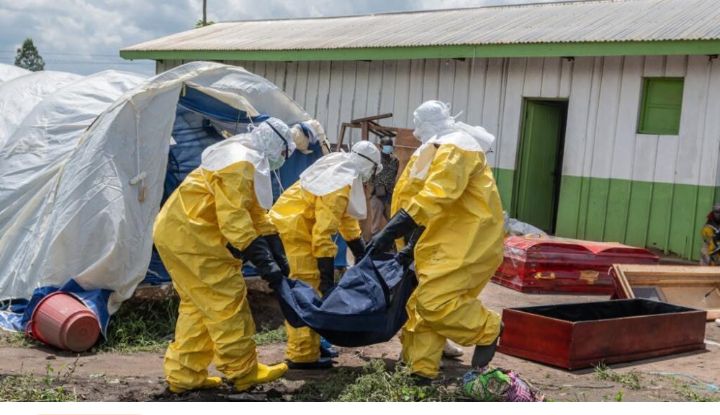
The Democratic Republic of Congo has entered a period of unprecedented health crisis. After enduring years of conflict in the east, it is now facing its worst Ebola outbreak to date, with the United Nations World Health Organization declaring it a global emergency.
The Ministry of Health in the Democratic Republic of Congo announced that the number of confirmed Ebola cases has reached 8,067, with 3,901 deaths. The figures were released on Monday, September 28, 2026, making it the 17th Ebola outbreak to hit the country.
The outbreak, caused by a strain of Ebola virus known as Bundibugyo, has spread to six provinces and 63 health zones. Ituri is the epicenter, with 6,155 cases and 2,834 deaths, accounting for 76% of the total infections.
Nord-Kivu comes in second with 1,523 cases and 906 deaths, a province that has seen a significant increase of 73% in the last 3 weeks. Haut-Uélé, Bas-Uélé and Tshopo have also been affected.
The outbreak began in May 2026, and is the second largest Ebola outbreak to hit the DRC after the 2018-2020 outbreak. It spread at an unprecedented rate, infecting nearly 5,000 people in the first 100 days alone.
The Bundibugyo virus causing this outbreak is different from the Zaire strain that has caused many major Ebola outbreaks in the past. This has made efforts to combat it difficult, as the vaccines and drugs used in previous outbreaks were designed specifically to combat the Zaire strain.
This is the 17th Ebola outbreak in the country, which the WHO has classified as a public health emergency of international concern. The case fatality rate is 48.4%, meaning that nearly half of those infected die immediately.
Fighting the virus remains particularly difficult in the north-east of the DRC, due to years of conflict, displacement of people and the collapse of some health services. 34 of the 49 people who died on 26 September died at home, outside hospitals.
At the African level, this epidemic ranks second among the Ebola epidemics that have killed the most people after the one that struck West Africa between 2014 and 2016, where more than 28,600 people were infected with Ebola while more than 11,000 people died from it in the countries of Guinea, Liberia and Sierra Leone.
In just one day on September 26, 78 new cases were reported, 57 in Ituri and 17 in Nord-Kivu. The Mandima zone in Ituri saw a sharp increase from 9 to 25 cases in 24 hours.
The outbreak was first reported in mid-May 2026 in Ituri province, where 3 farmers showed symptoms of hemorrhagic fever. Within the first week alone, 45 people had been infected, prompting the WHO to dispatch an emergency team.
In June and July 2026, the virus spread rapidly through the markets of Bunia and Mambasa, where traders moved in. Two doctors died during this period, forcing many health workers to flee, and hospitals in Mandima and Beni were overwhelmed.
In August 2026, the DRC government, in collaboration with WHO and MSF, set up 12 Ebola treatment centers in Ituri and Nord-Kivu, but they were closed due to the high number of patients. The United States agreed to give the DRC $267 million to fight the epidemic, and Russia and China provided experimental vaccines for Bundibugyo.
On September 24, 2026, Dr. Victor Kingombe, one of the leading doctors in Kisangani, died of Ebola, marking a major turning point. To date, only 2,001 people have recovered, with 848 still in isolation.
The biggest challenge now is tracing contacts. The tracing rate has dropped from 83.4% to 79.2%, and in Tshopo it has dropped to only 34.8%. This has led to unknown transmission chains that the WHO says are still out there.
Although the new figures fell by 20% on September 24, from 70 to 56, MSF warns that "it would be a mistake to say that the epidemic is under control." Many refugees in the east continue to be displaced by the M23, allowing the virus to continue to spread unchecked in the forests.
The Ministry of Health in the Democratic Republic of Congo announced that the number of confirmed Ebola cases has reached 8,067, with 3,901 deaths. The figures were released on Monday, September 28, 2026, making it the 17th Ebola outbreak to hit the country.
The outbreak, caused by a strain of Ebola virus known as Bundibugyo, has spread to six provinces and 63 health zones. Ituri is the epicenter, with 6,155 cases and 2,834 deaths, accounting for 76% of the total infections.
Nord-Kivu comes in second with 1,523 cases and 906 deaths, a province that has seen a significant increase of 73% in the last 3 weeks. Haut-Uélé, Bas-Uélé and Tshopo have also been affected.
The outbreak began in May 2026, and is the second largest Ebola outbreak to hit the DRC after the 2018-2020 outbreak. It spread at an unprecedented rate, infecting nearly 5,000 people in the first 100 days alone.
The Bundibugyo virus causing this outbreak is different from the Zaire strain that has caused many major Ebola outbreaks in the past. This has made efforts to combat it difficult, as the vaccines and drugs used in previous outbreaks were designed specifically to combat the Zaire strain.
This is the 17th Ebola outbreak in the country, which the WHO has classified as a public health emergency of international concern. The case fatality rate is 48.4%, meaning that nearly half of those infected die immediately.
Fighting the virus remains particularly difficult in the north-east of the DRC, due to years of conflict, displacement of people and the collapse of some health services. 34 of the 49 people who died on 26 September died at home, outside hospitals.
At the African level, this epidemic ranks second among the Ebola epidemics that have killed the most people after the one that struck West Africa between 2014 and 2016, where more than 28,600 people were infected with Ebola while more than 11,000 people died from it in the countries of Guinea, Liberia and Sierra Leone.
In just one day on September 26, 78 new cases were reported, 57 in Ituri and 17 in Nord-Kivu. The Mandima zone in Ituri saw a sharp increase from 9 to 25 cases in 24 hours.
Here's the situation since the start of this pandemic until now.
The outbreak was first reported in mid-May 2026 in Ituri province, where 3 farmers showed symptoms of hemorrhagic fever. Within the first week alone, 45 people had been infected, prompting the WHO to dispatch an emergency team.
In June and July 2026, the virus spread rapidly through the markets of Bunia and Mambasa, where traders moved in. Two doctors died during this period, forcing many health workers to flee, and hospitals in Mandima and Beni were overwhelmed.
In August 2026, the DRC government, in collaboration with WHO and MSF, set up 12 Ebola treatment centers in Ituri and Nord-Kivu, but they were closed due to the high number of patients. The United States agreed to give the DRC $267 million to fight the epidemic, and Russia and China provided experimental vaccines for Bundibugyo.
On September 24, 2026, Dr. Victor Kingombe, one of the leading doctors in Kisangani, died of Ebola, marking a major turning point. To date, only 2,001 people have recovered, with 848 still in isolation.
The biggest challenge now is tracing contacts. The tracing rate has dropped from 83.4% to 79.2%, and in Tshopo it has dropped to only 34.8%. This has led to unknown transmission chains that the WHO says are still out there.
Although the new figures fell by 20% on September 24, from 70 to 56, MSF warns that "it would be a mistake to say that the epidemic is under control." Many refugees in the east continue to be displaced by the M23, allowing the virus to continue to spread unchecked in the forests.
Tuganire newsroom
Related articles
Related articles
Health
In Nyagatare, 1,404 adolescents under the age of 18 suffered from unplanned pregnancies.
NSANZIMANA SylverSep 18, 2026

Health
Ebola patients in the DRC are complaining that they are suffering from severe hunger, which is why they are fleeing hospitals to find food and then returning
NSANZIMANA SylverJun 20, 2026

Health
795 people have been infected with Ebola, 181 have died and 40 have recovered from Ebola
NSANZIMANA SylverJun 15, 2026

Health
604 people have now been infected with the Ebola virus, while 102 have died from the epidemic.
NSANZIMANA SylverJun 11, 2026

Health
The effects of medications on male potency during ejaculation
NSANZIMANA SylverMay 26, 2026

Health
An angry mob has stormed part of Rwampara Hospital in the Ebola outbreak zone of eastern Democratic Republic of Congo.
NSANZIMANA SylverMay 22, 2026
Share articles
NSANZIMANA Sylver
Author