
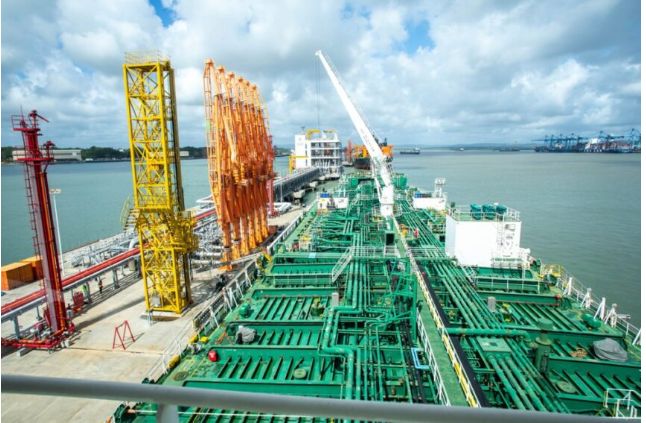
Rwanda and Kenya have officially launched a new system for importing petroleum products through the Port of Mombasa, after the MT Sea Wolf vessel delivered 40,000 tonnes of refined petroleum products to Kipevu Oil Terminal 2.
 NSANZIMANA SylverSep 30, 20263 min read
Share
Rwanda has been searching for sustainable solutions to its energy problems for many years, especially as a landlocked country that imports 100% of its petroleum products. On September 29, 2026, a major step was taken in easing the burden of fuel prices and energy security.
These 40,000 tons are almost equal to what Rwanda consumes in one month, as confirmed by Kenya's Minister of Energy and Petroleum, James Opiyo Wandayi.
This is the first time that the Rwanda National Energy Company (RNEC) has received fuel through this new program established between the Governments of Rwanda and Kenya.
The welcoming ceremony for the ship took place on September 29, 2026 in Mombasa, attended by the Secretary of State in the Ministry of Infrastructure, Armand Zingiro, and Minister Wandayi of Kenya.
Zingiro said that the arrival of the MT Sea Wolf in Kipevu is the implementation of agreements that the two countries had been preparing for months. He said, “Agreements that were on paper have become actions that will benefit Rwandans.”
Wandayi said, "The reception of the MT Sea Wolf demonstrates that Kenya is ready to become Rwanda's gateway to international energy markets."
Rwanda is reducing its dependence on a single route. Zingiro said that Rwanda's landlocked nature makes the issue of how goods are transported a key issue for energy security.
He said that disruptions to international shipping routes and fluctuations in global oil prices could directly impact fuel prices in Rwanda. “This year has reminded us how problems that occur far beyond our borders can quickly reach us,” he said.
He said the government's response is to increase the number of routes through which petroleum products can flow. This Kenyan route comes in addition to another that Rwanda opened through the Port of Tanga in Tanzania this year.
These products will arrive at the Port of Mombasa, unloaded from ships by the Kenya Ports Authority, and then transported by the Kenya Pipeline Company through its pipelines and warehouses, before continuing their journey to the Rwandan market.
Zingiro said that this program also supports Rwanda's policy of increasing its reserve fuel storage capacity. RNEC is building a new storage facility in Bugesera that will store 3 months of fuel.Rwanda-Kenya relations:
The two countries have enjoyed a very good relationship for over 20 years, based on cooperation within the East African Community (EAC). Kenya was one of the first countries to invest in Rwanda after the genocide, through banks such as KCB and Equity.
In the energy sector, Kenya has significant potential as it has the Kipevu Oil Terminal 2 which can handle 15 million tonnes per year. Rwanda has a market that is growing at 8% annually. Wandayi said that it is expected that the volume of petroleum products that will be transported through the Northern Corridor to Rwanda will increase 10-fold in the next 5 years.
This new partnership also shifts the focus from a business-to-business (G2B) model to a government-to-government (G2G) model. This means that the two governments are responsible for the pricing, security and consistency of the products, rather than independent traders. This will reduce fuel prices in Rwanda and help Kenya become a transport and energy hub in East Africa.
Rwanda and Kenya have officially launched a new system for importing petroleum products through the Port of Mombasa, after the MT Sea Wolf vessel delivered 40,000 tonnes of refined petroleum products to Kipevu Oil Terminal 2.
These 40,000 tons are almost equal to what Rwanda consumes in one month, as confirmed by Kenya's Minister of Energy and Petroleum, James Opiyo Wandayi.
This is the first time that the Rwanda National Energy Company (RNEC) has received fuel through this new program established between the Governments of Rwanda and Kenya.
The welcoming ceremony for the ship took place on September 29, 2026 in Mombasa, attended by the Secretary of State in the Ministry of Infrastructure, Armand Zingiro, and Minister Wandayi of Kenya.
Zingiro said that the arrival of the MT Sea Wolf in Kipevu is the implementation of agreements that the two countries had been preparing for months. He said, “Agreements that were on paper have become actions that will benefit Rwandans.”
Wandayi said, "The reception of the MT Sea Wolf demonstrates that Kenya is ready to become Rwanda's gateway to international energy markets."
Rwanda is reducing its dependence on a single route. Zingiro said that Rwanda's landlocked nature makes the issue of how goods are transported a key issue for energy security.
He said that disruptions to international shipping routes and fluctuations in global oil prices could directly impact fuel prices in Rwanda. “This year has reminded us how problems that occur far beyond our borders can quickly reach us,” he said.
He said the government's response is to increase the number of routes through which petroleum products can flow. This Kenyan route comes in addition to another that Rwanda opened through the Port of Tanga in Tanzania this year.
These products will arrive at the Port of Mombasa, unloaded from ships by the Kenya Ports Authority, and then transported by the Kenya Pipeline Company through its pipelines and warehouses, before continuing their journey to the Rwandan market.
Zingiro said that this program also supports Rwanda's policy of increasing its reserve fuel storage capacity. RNEC is building a new storage facility in Bugesera that will store 3 months of fuel.Rwanda-Kenya relations:
The two countries have enjoyed a very good relationship for over 20 years, based on cooperation within the East African Community (EAC). Kenya was one of the first countries to invest in Rwanda after the genocide, through banks such as KCB and Equity.
In the energy sector, Kenya has significant potential as it has the Kipevu Oil Terminal 2 which can handle 15 million tonnes per year. Rwanda has a market that is growing at 8% annually. Wandayi said that it is expected that the volume of petroleum products that will be transported through the Northern Corridor to Rwanda will increase 10-fold in the next 5 years.
This new partnership also shifts the focus from a business-to-business (G2B) model to a government-to-government (G2G) model. This means that the two governments are responsible for the pricing, security and consistency of the products, rather than independent traders. This will reduce fuel prices in Rwanda and help Kenya become a transport and energy hub in East Africa.
Tuganire newsroom
Related articles
Related articles

Politics
The DRC presidency has severed all relations with the Belgian Embassy in Kinshasa.
NSANZIMANA SylverOct 17, 2026

Politics
Perezidansi ya RDC yaciye imigenderanire yose na Ambasade y'Ububiligi i Kinshasa
NSANZIMANA SylverOct 17, 2026

Politics
FRN: Umutwe mushya wa Politiki n'Igisirikare ushinzwe na Joseph Kabila n'abayobozi ba AFC/M23 muri RDC
NSANZIMANA SylverOct 17, 2026
Politics
The City of Kigali has been ordered to pay 47 million Rwf to a resident who illegally demolished a building and is still standing.
NSANZIMANA SylverOct 12, 2026
Politics
Umujyi wa Kigali wategetswe kwishyura Miliyoni 47 Frw umuturage wasenyeye binyuranyije n'amategeko urinangira
NSANZIMANA SylverOct 12, 2026

Politics
INTUMWA ZA AU I KIGALI: Kagame yakiriye abahuza barimo Uhuru Kenyatta bamaze iminsi muburasirazuba bwa RDC muruzinduko tuganire kugarura amahoro muburasirazuba bwa RDC, ndetse n'umubano hagati ya RDC n' U Rwanda
NSANZIMANA SylverOct 8, 2026
Share articles
NSANZIMANA Sylver
Author