In the Democratic Republic of Congo, a group of people attacked a team of medical workers who were burying a person who died of Ebola
 NSANZIMANA SylverJun 5, 20262 min read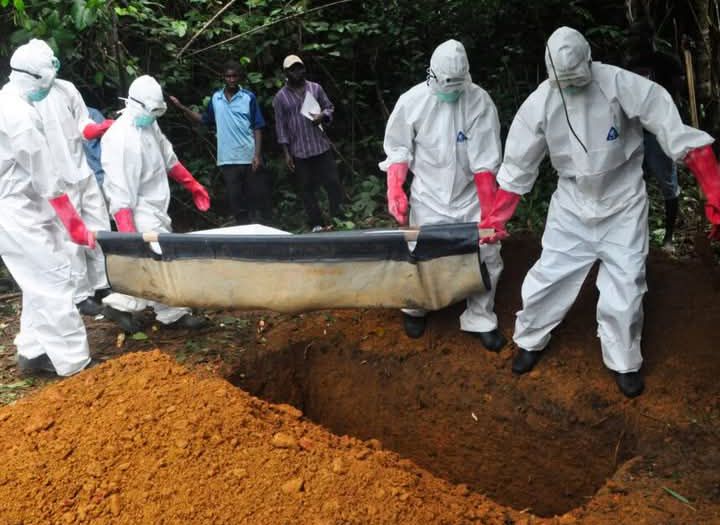
Share
In the Democratic Republic of Congo, a group of people attacked a team of medical workers who were burying a person who died of Ebola. This happened in South Kivu, in the town of Kitana, 13 kilometers from the city of Bukavu. The workers had just prepared the body for a safe burial when a group of people surrounded them, leaving them to run, and took the body away.
Congo's health ministry told Reuters that the incident occurred when workers were working to bury Ebola victims. The villagers blocked the workers' path and grabbed the body. This has raised concerns about the spread of Ebola, as health authorities say the body of an Ebola victim is highly infectious to anyone who touches it without proper protection.
The exact reason why the community is caring for the body is not yet clear. But it is suspected that some people do not believe that their loved one died of Ebola. Some believe that a special burial performed by experts violates traditional customs, so they choose to bury the body themselves.
In some parts of Congo, some residents continue to claim that Ebola is a hoax brought by foreigners to spread fear. When disbelief is dispelled, other patients flee hospitals or refuse to be tested, returning to their families and jobs, increasing the risk of transmission.
Despite these challenges, the Ministry of Health reports that since May 15, 2026, an Ebola outbreak of the Bundibugyo strain has been detected. To date, 363 people have been confirmed to be infected out of more than 1,000 suspected cases, and 62 have died. The figures show that the outbreak is ongoing and needs to be monitored daily.
Ebola is most prevalent in Ituri Province, where the majority of cases have been reported. It has also spread to Uganda, prompting both countries to step up their efforts to contain the disease. Health workers are working with the United Nations and non-governmental organizations to trace contacts of patients and educate the public on preventive measures.
To stop this epidemic, health authorities are asking for the cooperation of the community. Proper burial of the dead, early acceptance of Ebola testing, and avoiding unprotected contact with corpses are essential. Failure to do so could increase transmission and prolong the epidemic in the region.
Congo's health ministry told Reuters that the incident occurred when workers were working to bury Ebola victims. The villagers blocked the workers' path and grabbed the body. This has raised concerns about the spread of Ebola, as health authorities say the body of an Ebola victim is highly infectious to anyone who touches it without proper protection.
The exact reason why the community is caring for the body is not yet clear. But it is suspected that some people do not believe that their loved one died of Ebola. Some believe that a special burial performed by experts violates traditional customs, so they choose to bury the body themselves.
In some parts of Congo, some residents continue to claim that Ebola is a hoax brought by foreigners to spread fear. When disbelief is dispelled, other patients flee hospitals or refuse to be tested, returning to their families and jobs, increasing the risk of transmission.
Despite these challenges, the Ministry of Health reports that since May 15, 2026, an Ebola outbreak of the Bundibugyo strain has been detected. To date, 363 people have been confirmed to be infected out of more than 1,000 suspected cases, and 62 have died. The figures show that the outbreak is ongoing and needs to be monitored daily.
Ebola is most prevalent in Ituri Province, where the majority of cases have been reported. It has also spread to Uganda, prompting both countries to step up their efforts to contain the disease. Health workers are working with the United Nations and non-governmental organizations to trace contacts of patients and educate the public on preventive measures.
To stop this epidemic, health authorities are asking for the cooperation of the community. Proper burial of the dead, early acceptance of Ebola testing, and avoiding unprotected contact with corpses are essential. Failure to do so could increase transmission and prolong the epidemic in the region.
Tuganire newsroom
Related articles
Related articles
Share articles
NSANZIMANA Sylver
Author