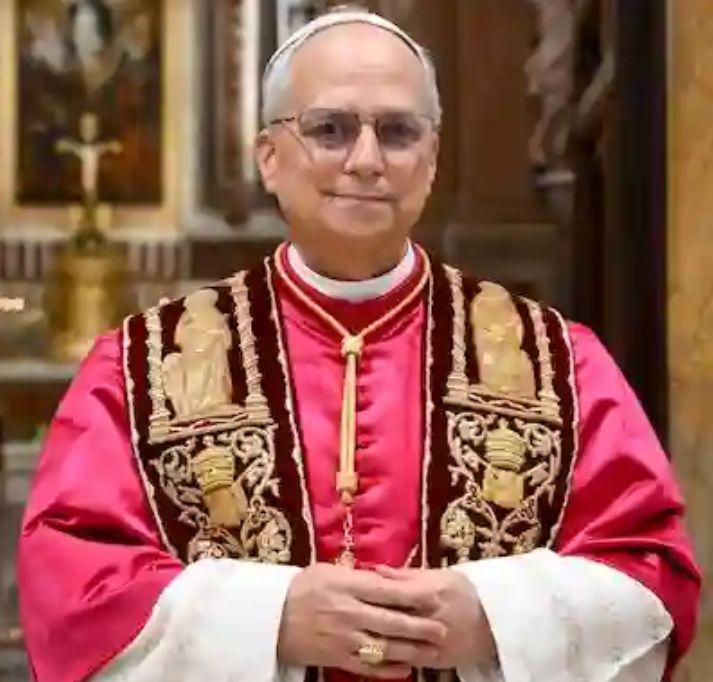
Pope Leo XIV has stressed that the Catholic Church will never support assisted suicide, known as euthanasia, during his first Mass at Notre-Dame Cathedral in Paris.
 NSANZIMANA SylverSep 28, 20262 min read
Share
As the world grapples with the issue of the right to die peacefully and the advancement of technology, Pope Leo XIV arrived in France on his first visit as head of the Catholic Church to the world. The visit took place at a pivotal moment in French history.
Pope Leo XIV has stressed that the Catholic Church will never support assisted suicide, known as euthanasia, during his first Mass at Notre-Dame Cathedral in Paris.
This Cathedral, which was renovated after a major fire on April 15, 2019, had been under reconstruction for more than 5 years. The celebration of Mass in this building was a major symbol of the renewal of the Catholic faith in Europe.
His comments follow a new law recently passed in France that allows a terminally ill patient to request assisted dying in peace. The law has sparked a heated debate between the Paris government and the Vatican.
Pope Leo XIV said that life is a fundamental and inalienable right, and no one has the power to take it away or to take it away, because it is a gift from God. He said that life must be protected from the moment of conception until it naturally dies.
He also touched on other issues of concern to the world today, such as genetic manipulation, human cloning (GPA), and the black market trade in human organs. He said that all of these can undermine a person's human dignity.
“I sometimes worry about these changes in society that could turn science and technology into activities aimed solely at financial gain, rather than at promoting the common good of humanity,” the Pope said.
He also spoke about the rapid development of Artificial Intelligence. He urged the world to rethink because in the future, AI could mislead people and control important decisions in their lives if it is not used wisely and peacefully.
This statement by Pope Leo XIV is seen as a powerful message for all of Europe, where many countries are changing laws related to life, death, and technology. The Church insists that all progress must prioritize the dignity of the human person over economic interests and political power.
Tuganire newsroom
Related articles
Related articles
Share articles
NSANZIMANA Sylver
Author